
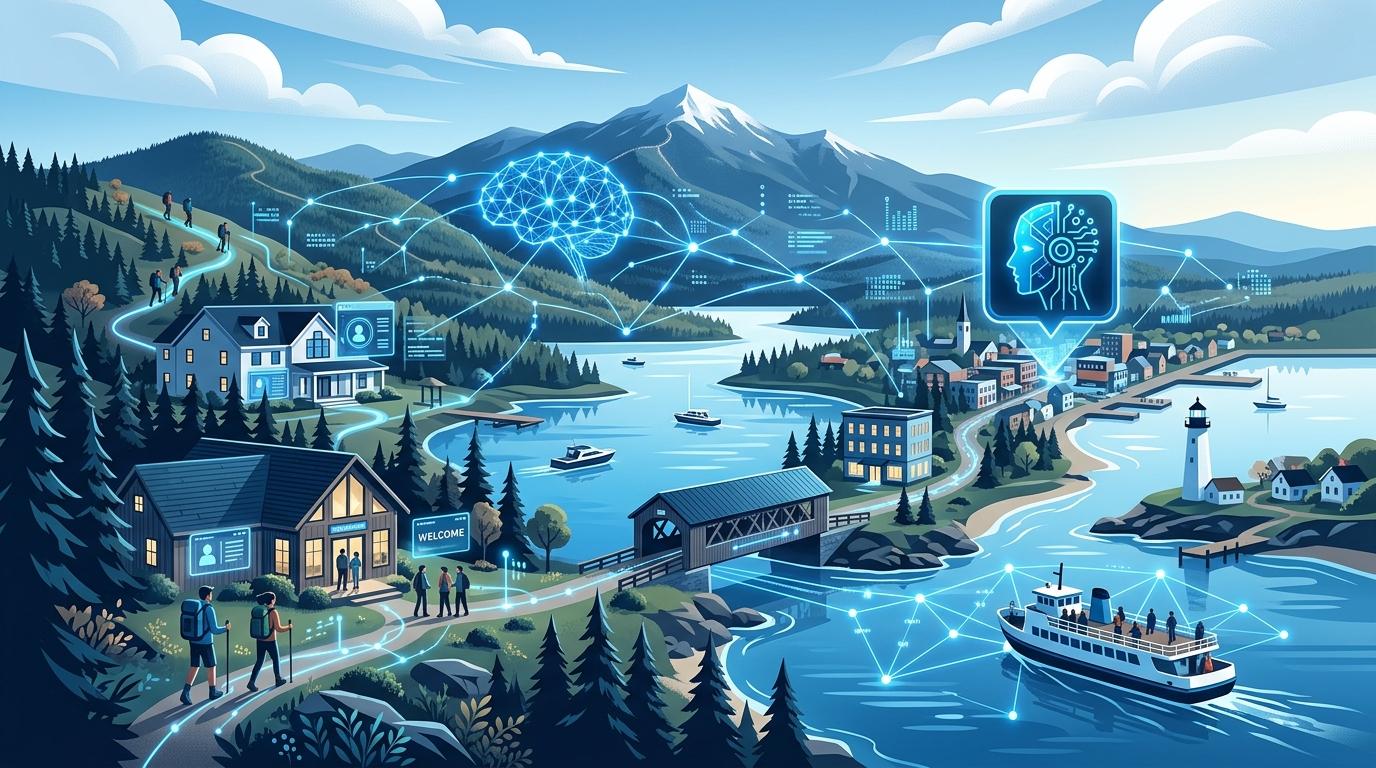
New Hampshire doesn't exactly scream "tech hub" when you picture it. You think foliage, ski slopes, covered bridges, maybe a lobster roll up near Portsmouth. But underneath all that postcard-perfect scenery, something interesting is happening. AI tools are quietly working their way into the state's tourism and hospitality industry, and honestly? It's worth paying attention to.
The Pressure Hotels and Inns Are Under
Let's be real about something first. Running a small inn in the Lakes Region or a boutique hotel in North Conway is hard. Staffing shortages have been brutal since the pandemic, operating costs keep climbing, and guests have higher expectations than ever. They've stayed at places that remember their preferences, send perfectly timed offers, and answer questions at 2am without complaint. Small NH properties can't always afford a front desk team that works around the clock—but AI can fill some of those gaps.
Chatbots have gotten genuinely good. Not the clunky, frustrating ones from five years ago that made you want to throw your phone across the room. Modern AI-powered chat tools can handle booking inquiries, answer questions about local attractions, explain cancellation policies, and even upsell room upgrades—all without a human in the loop. A few inns around the Mount Washington Valley area have started experimenting with these, and the early feedback is that guests often don't realize they're talking to an automated system until they're already satisfied with the answer.
Dynamic Pricing Is Already Here
If you've booked a ski weekend at Loon or Bretton Woods lately and noticed the room rates felt a little... unpredictable, you've already felt AI's influence. Revenue management software powered by machine learning has been crunching data on booking patterns, weather forecasts, local events, and competitor pricing to set rates in real time. This isn't new for big hotel chains, but the tools are becoming accessible enough that independent properties are starting to use them too.
The upside for businesses is obvious—capturing more revenue during peak demand. The upside for travelers is a little less clear-cut, but if you're flexible and book at the right time, you can genuinely find better deals. The algorithms reward early planners and last-minute risk-takers sometimes. It's a weird new game.
Personalization at Scale—Even for Small Operators
One thing that's genuinely exciting is how AI is making personalization possible for operators who could never afford it before. Think about what a large resort chain does: they track your preferences, remember that you always request a quiet room, know you ordered the same breakfast three visits in a row. That kind of white-glove service used to require expensive CRM systems and dedicated staff.
Now there are platforms that smaller NH properties can actually afford that do a version of this. They pull together guest data from previous stays, email interactions, and booking history to help staff anticipate needs before guests even arrive. It's not magic, and it still requires humans to act on the insights—but the AI is doing the pattern recognition work that used to take a really experienced front desk manager years to develop.
What About the Visitor Experience Itself?
Beyond the back-office stuff, AI is starting to touch how people actually experience visiting New Hampshire. The state's tourism office and various regional organizations have been exploring AI-powered trip planning tools that can suggest itineraries based on traveler preferences. Ask it what to do in the White Mountains for a weekend with two kids under ten and a dog, and you'll get something actually useful instead of a generic listicle.
AI-generated content is also showing up in unexpected places—trail condition summaries, restaurant recommendation engines, even some of the social content you see from tourism boards. That last one is a little controversial. There's a real tension between the efficiency of AI-generated content and the authentic, local voice that makes NH tourism marketing feel genuine. A machine can write "experience the breathtaking fall foliage" but it can't capture what it actually feels like to pull off Route 302 at the right moment in October and just stand there.
The Jobs Question—Let's Not Pretend It Isn't There
Any honest conversation about AI in hospitality has to acknowledge the employment angle. Tourism is one of NH's biggest economic sectors and it employs a lot of people, particularly in rural communities where options are limited. The fear that AI will automate away hospitality jobs is real and not entirely unfounded.
But the picture is more complicated than "robots take jobs." Most operators I've talked to aren't looking to replace staff—they're desperately trying to stretch their existing teams further. AI handles the repetitive, low-value tasks so that the actual humans can focus on the things that matter: genuine guest interactions, problem-solving, creating memorable moments. A chatbot can answer "what time does the pool close" but it can't notice that a guest seems stressed and offer them a quiet corner of the lobby.
The hospitality industry runs on human connection. That's not going away. What's changing is the infrastructure around it.
What NH Businesses Should Actually Do
If you're running a hospitality business in New Hampshire and feeling overwhelmed by all this, here's a practical take: you don't need to do everything at once. Start with one problem. Is it answering after-hours inquiries? Look at a chatbot. Is it pricing consistency? Explore a revenue management tool. Is it getting repeat guests back? Dig into your email marketing and see if any AI-assisted platforms fit your budget.

The NH tourism industry has always thrived on authenticity and personal touch. AI works best here when it's invisible—when it's handling the friction so the human moments can shine. That's the balance worth chasing.
And if you want to talk through any of this with people who are actually thinking about it, well—that's kind of what we're here for.