
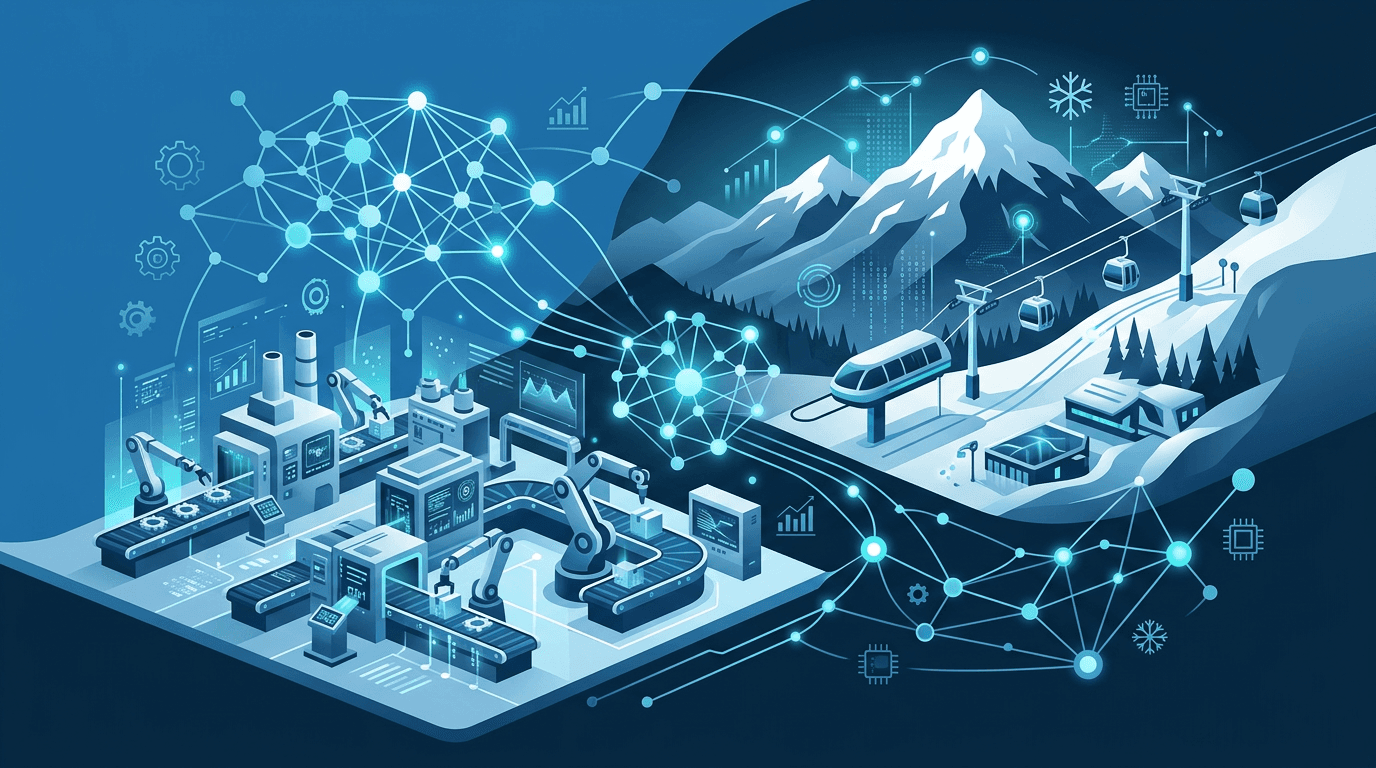
You don't have to look to Silicon Valley to find AI making a real dent in how business gets done. Right here in New Hampshire, industries that have defined our economy for generations are being reshaped — sometimes gradually, sometimes dramatically — by machine learning, computer vision, predictive analytics, and a whole lot of data.
Let's dig into what's actually happening on the ground.
Manufacturing: The Quiet Revolution in the Mill Towns
New Hampshire's manufacturing sector employs tens of thousands of people and contributes billions to the state's GDP. It's also one of the industries where AI adoption has been the most tangible — and honestly, the most underreported.
Companies across the Merrimack Valley and the Seacoast region are deploying predictive maintenance systems that use sensor data and machine learning to flag equipment failures before they happen. Think about what that means practically: instead of a production line going dark at 2am because a motor burned out, a model trained on months of vibration and temperature data sends an alert three days earlier. Downtime gets slashed. Costs drop.
Quality control is changing too. Computer vision systems — cameras paired with AI models — can inspect parts at speeds no human team could match, catching defects that would've slipped through. A few smaller NH manufacturers we've heard from in our meetup community have started piloting these systems, and the results are genuinely impressive. Not perfect, but impressive.
The honest concern here? Workforce displacement. It's real, and we shouldn't sugarcoat it. The optimistic take is that AI handles the repetitive, dangerous, or ultra-precise tasks while workers shift toward higher-skill roles. But that transition requires investment in training, and not every company is making that investment yet.
Healthcare: High Stakes, High Potential
New Hampshire's healthcare industry is massive — Dartmouth Health, Concord Hospital, Southern NH Medical Center, and dozens of smaller providers collectively employ a huge chunk of the state's workforce. And healthcare is one of those fields where AI can genuinely save lives, which makes it worth paying close attention to.
Radiology is probably the most mature AI application in clinical settings right now. Models trained on millions of medical images are helping radiologists catch anomalies in CT scans and X-rays faster and with fewer misses. These tools aren't replacing radiologists — they're acting more like a second set of eyes that never gets tired.
On the administrative side, AI-powered tools are tackling the brutal paperwork burden that drives so many clinicians to burnout. Prior authorization workflows, clinical documentation, appointment scheduling — there's a lot of low-hanging fruit here and NH healthcare systems are starting to pick it.
What's trickier is the data privacy piece. Healthcare data is incredibly sensitive, and building AI systems that comply with HIPAA while actually being useful is harder than it sounds. We're seeing a lot of vendors promise the moon here. Be skeptical.
Tourism and Hospitality: Smarter Seasons
This one might surprise you. Tourism is a $6 billion+ industry in New Hampshire — the White Mountains, Lakes Region, and seacoast draw visitors year-round. And AI is starting to change how that industry operates in some pretty interesting ways.
Dynamic pricing, for starters. Ski resorts and hotels have been using algorithmic pricing for a while, but the models are getting much more sophisticated. They're pulling in weather forecasts, local event calendars, historical booking patterns, even social media sentiment to set prices in real time. If you've noticed lift ticket prices fluctuating week to week at places like Loon or Cannon, that's not random — it's a model optimizing revenue.
Chatbots and AI assistants are handling a growing share of customer service interactions for tourism businesses. Honestly, the quality varies wildly. Some of them are genuinely helpful, others are frustrating enough to make you want to call a human immediately. The businesses getting it right are the ones using AI to handle the simple, repetitive queries and routing complex or emotional situations to actual staff.
There's also interesting work happening around trail safety and outdoor recreation. NH Fish and Game and various conservation groups are experimenting with AI tools that analyze weather patterns and historical rescue data to identify high-risk conditions. Could save lives. Worth watching.
Agriculture: Small Scale, Big Opportunity
NH isn't exactly Iowa, but agriculture — especially specialty crops, dairy, and the growing local food movement — matters here. And precision agriculture tools are becoming accessible even to smaller operations.
Drone-based crop monitoring, soil sensors feeding into predictive models, AI-driven irrigation systems — these used to be toys for massive industrial farms. The cost has come down enough that a mid-sized NH farm can realistically consider them. UNH Cooperative Extension has been doing some solid work helping local farmers understand what's actually useful versus what's just marketing fluff.
The challenge is connectivity. A lot of NH's agricultural land is in areas with spotty internet or cellular coverage, and many of these AI tools assume reliable connectivity. That's a real barrier, and it's worth acknowledging.
What This Means for Our Community
Here's the thing — AI adoption in New Hampshire isn't a monolith. You've got some companies moving fast and aggressively, others barely aware of what's available, and a whole lot in the middle trying to figure out where to start without blowing their budget on something that doesn't work.
That gap is actually why communities like ours matter. When a small manufacturer in Nashua can sit down with a data scientist from a Manchester tech firm and a healthcare IT person from Concord, that's where real, practical knowledge gets shared. Not vendor pitches. Not conference keynotes. Actual conversations about what's working and what isn't.

The industries reshaping themselves with AI right now in NH aren't doing it because they read a McKinsey report. They're doing it because someone on their team took a chance, learned something new, and made a case for trying it. That's how this stuff actually spreads.
If you're working in any of these sectors and trying to figure out where AI fits — or doesn't fit — for your organization, come to a meetup. Bring your questions. Bring your skepticism too, honestly. We need both.