
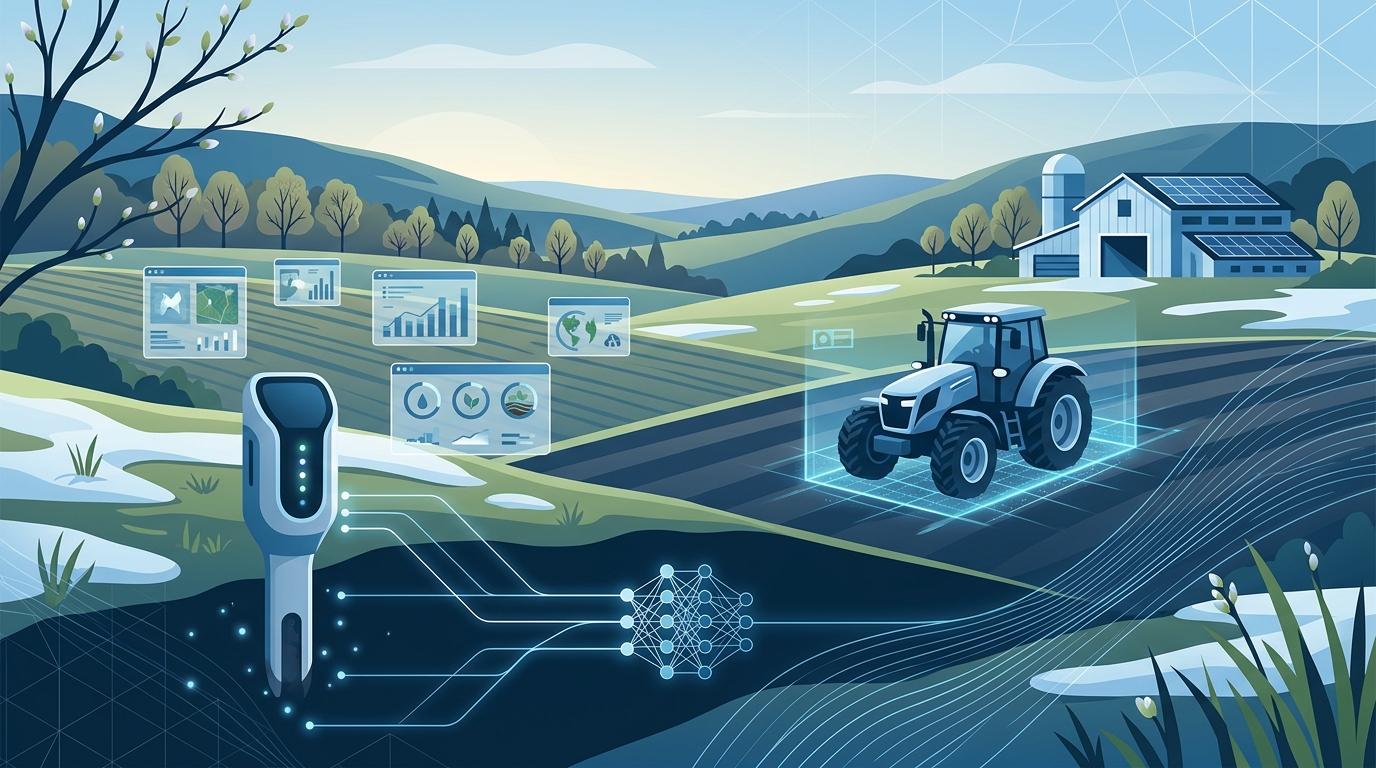
Spring in New Hampshire hits different. The ground thaws, the mud season makes a mess of everything, and farmers across the state are already deep in planning mode — seed orders, soil tests, equipment checks. But this year, a growing number of them are adding something new to that routine: AI tools.
It's not the robot-farmer future that tech magazines love to hype. It's quieter than that, more practical. A dairy operation in the Upper Valley using a computer vision app to catch early signs of mastitis. A vegetable farm in Merrimack County running soil moisture data through a predictive model to cut irrigation costs. Small experiments, real results.
We've been talking to folks in the NH farming community, and honestly, the picture that emerges is pretty nuanced. Some of this stuff is genuinely useful. Some of it is still more promise than payoff.
Crop Disease Detection: The App That's Actually Getting Used
One of the most accessible AI tools for small and mid-size farms right now is disease detection through smartphone apps. Platforms like Plantix and Google's Lens-based plant identification have been around for a few years, but the underlying models have gotten noticeably better.
The basic idea is simple — you take a photo of a leaf, a stem, whatever looks off, and the app identifies potential diseases, pests, or nutrient deficiencies. For farmers who don't have an agronomist on speed dial, this is genuinely valuable. Catching early blight on tomatoes a week earlier than you would have otherwise? That's the difference between a manageable problem and losing a significant chunk of your crop.
The catch is accuracy. These models are trained heavily on data from large commercial operations in warmer climates, and they don't always translate perfectly to the specific conditions you find in a New Hampshire growing season. A cool, wet spring creates disease pressures that look different from what a model trained mostly on California or Midwest data expects. So you're using these tools as a starting point, not a final answer. That's a reasonable way to think about it.
Precision Irrigation and Soil Intelligence
Water management is a big deal for NH farmers, especially as weather patterns get less predictable. Too much rain followed by a dry stretch, or vice versa — it makes irrigation planning genuinely hard.
Several farms in the state are experimenting with sensor networks paired with AI-driven scheduling tools. You stick soil moisture sensors in the ground at different depths, connect them to a platform like CropX or Arable, and the system builds a model of your specific field's water behavior. Over time it gets smarter about when to irrigate and when to hold off.
The upfront cost is real — sensor hardware, subscription fees, setup time. For a large operation it can pencil out pretty quickly. For a smaller farm it's a harder calculation. But the water savings data from early adopters is compelling enough that more people are taking a serious look.
One thing worth knowing: these platforms work best when you feed them good data over multiple seasons. The first year is almost like a calibration period. You're building the model's understanding of your specific microclimate, your soil composition, your drainage patterns. So farmers who started experimenting last year or the year before are in a much better position than someone just getting started now.
Livestock Monitoring: More Than Just Fancy Ear Tags
Dairy farming is huge in New Hampshire, and this is actually one of the areas where AI has made the most concrete inroads. Automated milking systems have been around for a while, but the newer generation of livestock monitoring tools goes further.
Wearable sensors on cows — ear tags, collars, leg bands — track movement, rumination patterns, temperature, and other biometrics. AI models analyze that data continuously and flag anomalies. A cow that's moving less than usual, or whose rumination patterns shift, might be getting sick. Or coming into heat. The system catches it before a farmer doing visual checks twice a day would.
The ROI on this stuff can be pretty clear for dairy operations above a certain size. Catching a health issue early means lower vet bills, less lost production, better outcomes for the animal. And the heat detection piece directly affects reproduction efficiency, which matters enormously for a dairy operation's bottom line.
Smaller farms are still mostly priced out, but the costs have been coming down steadily. It's worth watching.
The Honest Challenges
Let's not sugarcoat this. There are real barriers to AI adoption in New Hampshire agriculture, and they're not going away overnight.
Connectivity is a genuine problem. A lot of NH farmland is in areas with spotty cell coverage and no broadband. Cloud-based AI tools that need a reliable internet connection to function are basically useless if your farm is in a dead zone. This is a solvable infrastructure problem but it hasn't been solved yet.
Then there's the learning curve. Most farmers are already working brutally long hours. Asking someone to also become proficient in a new software platform, troubleshoot sensor hardware, and interpret data dashboards — that's a real ask. The tools that get adopted are the ones that are genuinely simple to use, not the ones with the most impressive feature lists.
And honestly, there's some healthy skepticism in the farming community about tech solutions in general. That skepticism isn't irrational. There's a long history of ag-tech companies making big promises and then pivoting or shutting down, leaving farmers stuck with orphaned hardware and no support. Trust takes time to build.
What's Actually Worth Paying Attention To
If you're a farmer in NH curious about where to start, or just someone interested in how AI is touching industries outside the tech bubble, here's the honest take:

The disease detection apps are low-risk, low-cost, and worth trying right now. Download one, use it this season, see what you think. The soil monitoring platforms are worth a serious look if you're dealing with irrigation challenges and you have the connectivity to support them. Livestock monitoring is compelling for dairy operations at scale.
The bigger picture is that AI in agriculture is moving from experimental to practical, but it's doing it unevenly. The farms that will benefit most in the next few years are the ones experimenting now, building familiarity with the tools, and figuring out what actually fits their operation — not waiting for some perfect turnkey solution that works for everyone.
New Hampshire farmers have always been adaptable. That's kind of the job description when you're farming in a place with this climate and these soil conditions. The ones we've talked to who are trying these tools aren't doing it because they read a think piece about the future of food. They're doing it because they have a specific problem and they're trying to solve it. That's exactly the right instinct.