
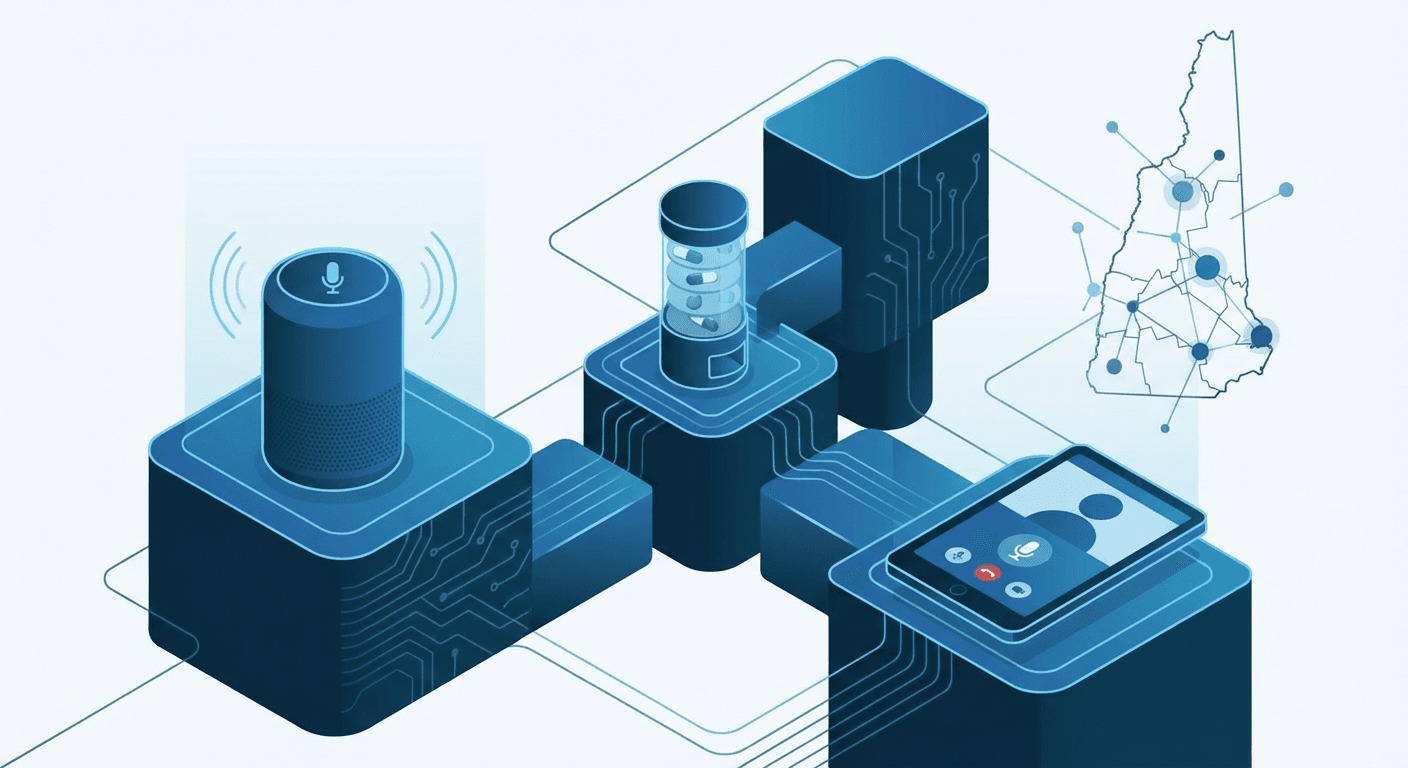
There's a conversation happening in senior centers, assisted living facilities, and kitchen tables across New Hampshire that doesn't get nearly enough attention in AI circles. It's not about large language models or autonomous agents. It's about whether Grandma can get her medication reminder to actually work, or whether a 78-year-old veteran in Concord can video call his grandkids without needing a tech-savvy neighbor to help him set it up.
AI for seniors is one of the most quietly impactful applications of this technology right now. And honestly? It's one we should be talking about a lot more.
Why This Matters in New Hampshire Specifically
New Hampshire has one of the oldest median populations in the country. According to the NH Bureau of Elderly and Adult Services, roughly 20% of the state's residents are 65 or older—and that number is climbing. A huge chunk of those folks live in rural areas where healthcare access is limited, family members might be hours away, and the nearest pharmacy could be a 40-minute drive down a two-lane road.
That context matters when we're thinking about which AI tools are actually useful versus which ones are just clever demos that look good at a conference.

Voice Assistants: The Gateway Drug of Senior AI
Almost every conversation about AI and older adults starts here, and for good reason. Amazon Echo and Google Nest devices have become surprisingly common in senior households, and they do a genuinely good job at a handful of high-value tasks.
Medication reminders are probably the biggest one. You can set up recurring alarms with natural language—"Alexa, remind me to take my blood pressure pill every morning at 8"—and it just works. No app to navigate, no touchscreen to fumble with. For someone managing five or six medications, this is legitimately life-changing.
Weather checks, phone calls, playing music from a specific era, turning lights on and off—these might sound trivial but they add up to a meaningful degree of independence for someone with limited mobility or early-stage cognitive decline. The friction reduction is real.
That said, voice assistants aren't perfect. They mishear things constantly. They sometimes give confidently wrong answers. And setting them up in the first place still requires someone comfortable with technology. So they're a great tool, not a complete solution.
AI-Powered Health Monitoring
This is where things get genuinely exciting. Wearables like the Apple Watch and Fitbit have had basic health tracking for years, but the AI layer on top of that data has gotten dramatically better.
Fall detection is probably the most important feature for seniors living alone. The Apple Watch can detect when you've taken a hard fall and automatically contact emergency services if you don't respond within a minute. In rural New Hampshire, where a fall in the driveway in January could be genuinely dangerous, this isn't a gimmick—it's potentially the difference between life and death.
There are also dedicated devices like the Bay Alarm Medical or Medical Guardian systems that have added AI-driven anomaly detection. They're not just waiting for you to press a button anymore. Some can detect irregular movement patterns that might indicate a fall or sudden health event even before the user realizes something is wrong.
For families, tools like CarePredict use passive AI monitoring in the home—tracking movement patterns, sleep, eating habits—and flag when something seems off. It's not surveillance in a creepy sense, it's more like a gentle safety net. Though that line can feel blurry, and it's worth having honest conversations with seniors about what they're comfortable with.
Combating Isolation: AI as a Social Bridge
Isolation is one of the biggest health risks for older adults, and it's a serious problem in rural New Hampshire. AI-powered communication tools have gotten surprisingly good at lowering the barrier to staying connected.
GrandPad is a tablet designed specifically for seniors—simplified interface, no app store to navigate, just a handful of core functions including video calling. It uses AI to simplify the UX and filter out spam and scam calls, which are a massive problem for older adults. Several senior centers in New Hampshire have started recommending it.
There are also AI companions like ElliQ, a social robot designed specifically for older adults. It can hold conversations, remind you about appointments, encourage physical activity, and generally just... be present. The research on social AI companions for seniors is still early, but the preliminary results on reducing loneliness are genuinely promising. Is it a replacement for human connection? Absolutely not. But for someone whose family lives far away and whose friends have passed on, it might fill a gap that nothing else is filling.
What Families and Caregivers Can Actually Do
If you're reading this and thinking about a parent or grandparent in New Hampshire, here's a practical starting point that doesn't require a huge investment or a tech background.
Start with one thing. Don't try to set up five devices at once. Pick the highest-value intervention—usually medication reminders or fall detection—and get that working well before adding anything else. Overwhelm is real, and it's the number one reason these tools get abandoned.
Involve the senior in the decision. This sounds obvious but it gets skipped constantly. Autonomy matters enormously to older adults, and tools that get imposed on them rather than chosen by them tend to collect dust. Ask what they actually find frustrating or scary about daily life, and work backward from there.
Check in regularly. AI tools need maintenance. Voice assistant routines need updating. Wearable batteries die. Software updates change interfaces. A monthly 20-minute check-in—in person or over video—can keep everything running smoothly and gives you a natural touchpoint to notice if something seems off.
The Bigger Picture
We spend a lot of time in AI communities talking about productivity tools for professionals, coding assistants, and the future of work. All of that is interesting and worth discussing. But some of the most human applications of this technology are happening in quieter corners—in the apartments of 80-year-olds in Manchester who just want to call their daughter without asking for help, or in the farmhouses of elderly couples in Carroll County who want to stay in their home as long as possible.
That's a use case worth centering. And it's one where our community—developers, enthusiasts, people who understand this technology—can actually make a difference by helping the people in our lives navigate it thoughtfully.
If you're working on anything in this space, or if you have experience deploying AI tools for older adults in New Hampshire, we'd genuinely love to hear about it at our next meetup. These conversations matter.