
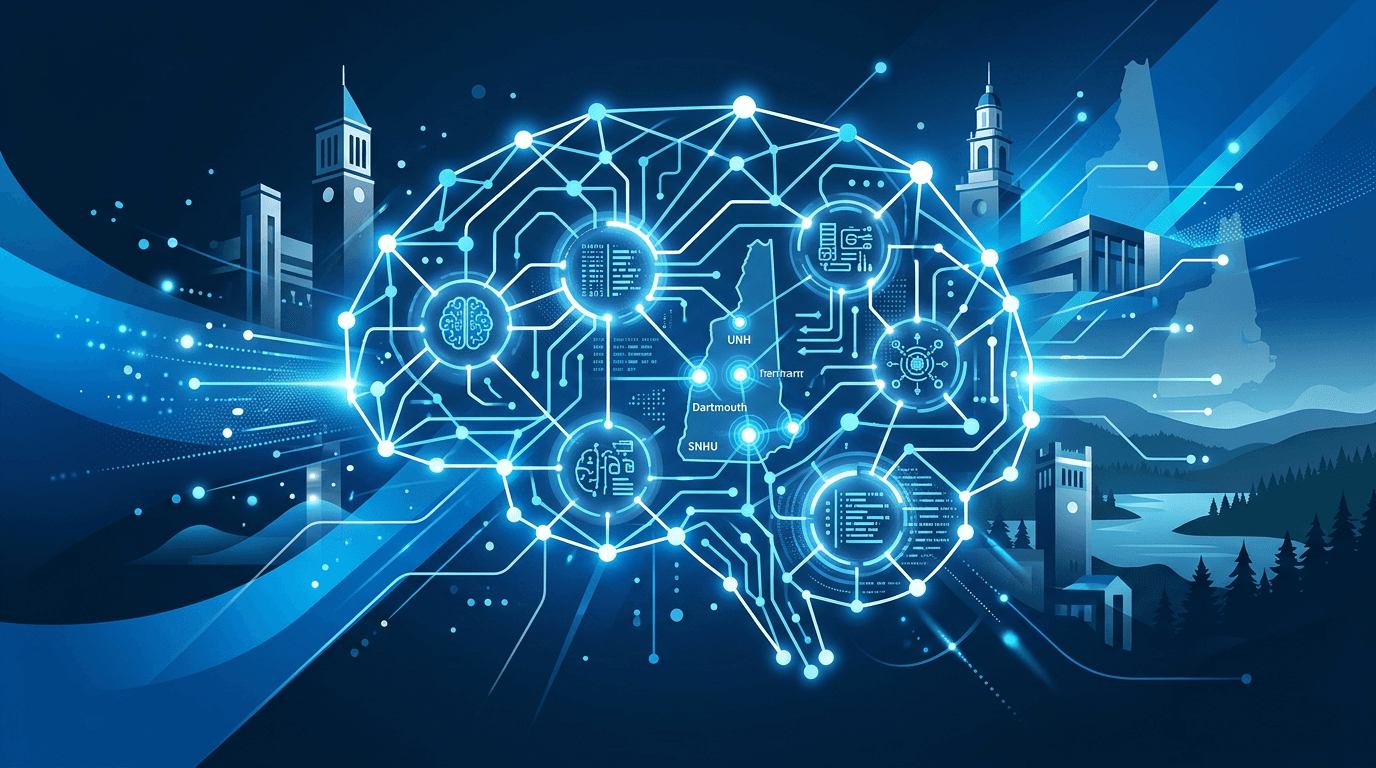
Something is shifting in New Hampshire's higher education landscape, and it's been building for a while now. UNH, Dartmouth, Southern New Hampshire University, and a handful of smaller colleges across the state have all been expanding their AI-related offerings — new concentrations, certificates, even full degree tracks in some cases. It's exciting, honestly. But if you're a student trying to decide whether to jump in, there's more to consider than just the program name on a brochure.
What's Actually Being Offered Right Now
Let's be real about the range here. Not every "AI program" is the same thing. Some schools are offering dedicated BS or MS degrees in Artificial Intelligence or Machine Learning. Others are adding AI concentrations inside existing Computer Science or Data Science programs. And then there are certificate programs — some online, some hybrid — that are shorter, cheaper, and aimed at working professionals who want to upskill without going back to school full-time.

SNHU has been aggressive about online AI and data science offerings for years now, which makes sense given their model. UNH's computer science department has faculty doing serious ML research, and that research environment matters more than people realize when you're picking a graduate program. Dartmouth is Dartmouth — their AI-adjacent work in the Thayer School of Engineering and the CS department has been strong for decades, though the price tag is its own conversation.
If you're evaluating programs, dig past the marketing. Look at who's actually teaching these courses. Are they researchers actively publishing? Industry practitioners with real experience? A mix of both is usually the sweet spot.
The Curriculum Gap Problem
Here's something nobody in admissions is going to tell you: AI moves faster than university curricula. A program that was designed two years ago might be teaching tools and frameworks that have already been superseded. That's not necessarily a dealbreaker — foundational math, statistics, and programming don't expire — but it's something to watch for.
Ask programs directly: when was this curriculum last updated? Are they teaching PyTorch or TensorFlow? Are they covering transformer architectures and large language models, or is the deep learning content still mostly CNNs for image classification? Are there electives or capstone options that let you work on current problems?
The best programs build in flexibility. They teach you how to think about AI problems, not just how to run a specific library. That's the stuff that stays useful when the next wave of tools shows up — and it will.
What the Job Market Actually Wants
This is where students sometimes get tripped up. There's a gap between what sounds impressive on a program website and what hiring managers are actually looking for. Spend any time talking to people in the NH tech community — or honestly anywhere — and you'll hear the same things over and over.
Employers want people who can take a messy, real-world problem and figure out whether AI is even the right tool for it. That sounds obvious but it's genuinely rare. A lot of new grads come out knowing how to build models but struggling to communicate results to non-technical stakeholders, or unsure how to handle data that's incomplete, biased, or just kind of a disaster.
Practical experience matters enormously. Internships, research assistant positions, capstone projects with real companies — these things carry serious weight. When you're looking at programs, ask what their industry partnership situation looks like. Do students get placed in internships? Are there project-based courses where you're working with actual organizations? NH has a growing tech ecosystem, especially around Manchester and the seacoast area, and good programs should be plugged into that.
The Ethical Side Isn't Optional Anymore
A few years ago, AI ethics felt like a niche elective that only the philosophically inclined cared about. That's changed pretty dramatically. Companies are getting burned by biased models, regulators are paying attention, and the public conversation around AI has gotten a lot more complicated. Employers know this.
Look for programs that weave ethics into the technical curriculum rather than treating it as a standalone box to check. Understanding fairness constraints in model design, thinking about data provenance and consent, knowing how to audit a model for disparate impact — these aren't soft skills anymore. They're part of the job.
A Few Honest Recommendations
If you're an undergrad just starting out, a strong CS degree with AI/ML coursework is probably more versatile than a narrow AI-specific degree right now. The fundamentals travel well. If you're a grad student or career-changer, a focused MS in ML or AI can absolutely make sense — just make sure the program has research depth or strong industry ties, not just a catchy name.
For working professionals, the certificate and online options from NH schools are genuinely worth considering, especially if you're trying to add AI skills without leaving your job. Just be honest with yourself about what you'll actually complete — a half-finished online certificate helps nobody.
And regardless of what program you pick, get involved in the broader community. Come to meetups. Build things. Put projects on GitHub. Talk to people working in the field. The degree opens doors but the work you do outside the classroom is often what gets you through them.
New Hampshire's AI education scene is growing up fast. That's a good thing for students here — but the best outcomes are going to go to people who approach these programs with clear eyes and a plan.